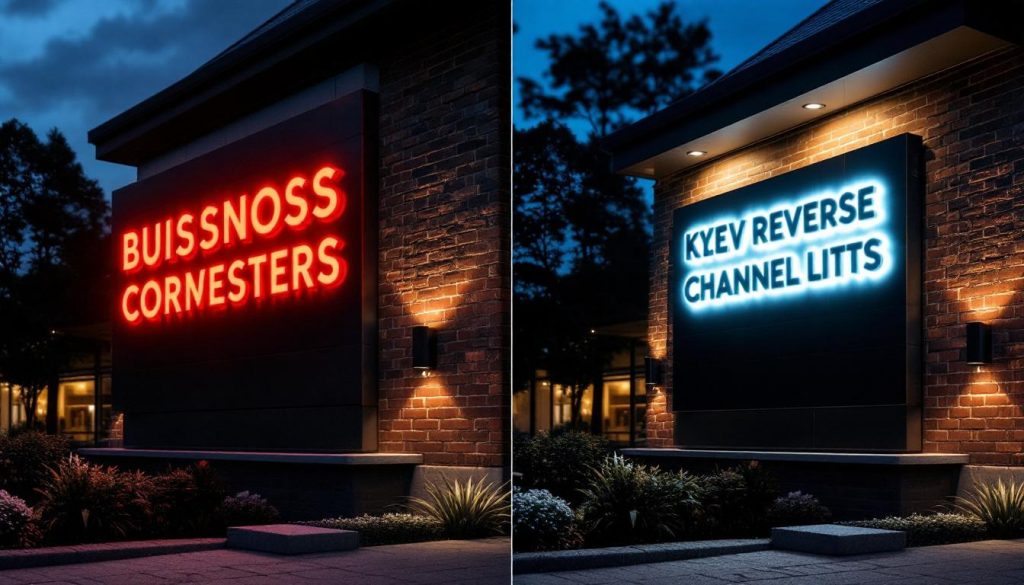
When you drive down Route 66 in Glendora at night, you see hundreds of illuminated signs. Some shout at you with bright, bold colors. Others glow softly, creating an aura of sophistication and elegance.
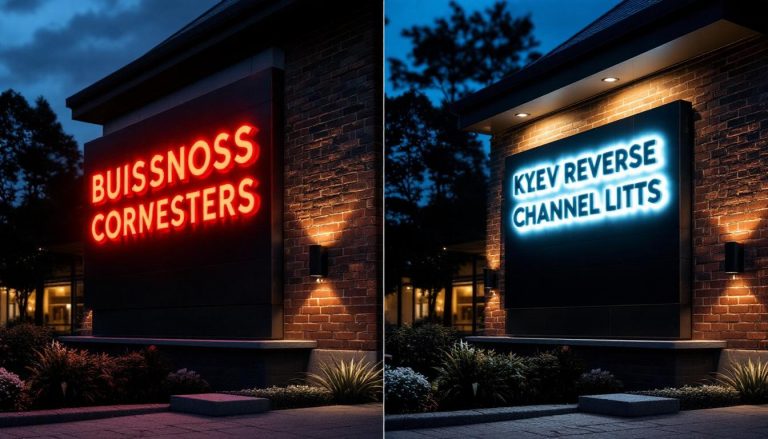
This difference usually comes down to one technical choice: Front-Lit vs. Halo-Lit channel letters.
Choosing between these two styles is the most important design decision you will make for your storefront. It dictates not just visibility, but the “vibe” of your brand. A urgent care clinic needs a different look than a high-end steakhouse. A discount retailer needs a different look than a boutique law firm.
In this guide, we will compare the two most popular forms of illuminated signage, breaking down their mechanics, their aesthetic impact, and which one is the right choice for your business in 2026.
Option A: Front-Lit Channel Letters (The Standard)
If you picture a standard strip mall sign—Red “Subway” letters or Blue “Chase” letters—you are picturing Front-Lit Channel Letters.
How They Work
- Face: Translucent acrylic (plastic).
- Returns (Sides): Aluminum.
- Lighting: LED modules inside the letter shine forward, through the acrylic face.
The Aesthetic: “Bright, Readable, Retail”
Front-lit letters are designed for maximum readability. They are the workhorses of the sign industry. The entire face of the letter glows. Because the light is direct, they appear sharper and brighter from a distance than any other sign type.
Best For:
- Retail Stores: If you want people to spot you from 300 yards away on the freeway, you want Front-Lit.
- Medical / Urgent Care: High visibility implies accessibility and urgency.
- Fast Casual Dining: Bright colors stimulate appetite and attention.
- Logos with Specific Colors: If your brand requires a specific Pantone shade of green, translucent vinyl on a front-lit letter is the best way to match it accurately at night.
Pros:
- brightest option available.
- Most affordable illuminated option (standard manufacturing process).
- Easy to service.
Cons:
- Can look “generic” if not designed well.
- Sometimes too bright for intimate settings (fancy restaurants).
Option B: Halo-Lit Channel Letters (The Upgrade)
Also known as Reverse Channel Letters or Backlit Letters, these signs flip the script. Instead of shining forward, they shine backward.
How They Work
- Face: Solid Aluminum (opaque—light cannot pass through).
- Back: Clear polycarbonate (transparent).
- Mounting: The letters are mounted 1–2 inches *off* the wall using spacers.
- Lighting: LED modules shine backward, hitting the wall and creating a glow (halo) around the dark silhouette of the letter.
The Aesthetic: “Sophisticated, Premium, Architectural”
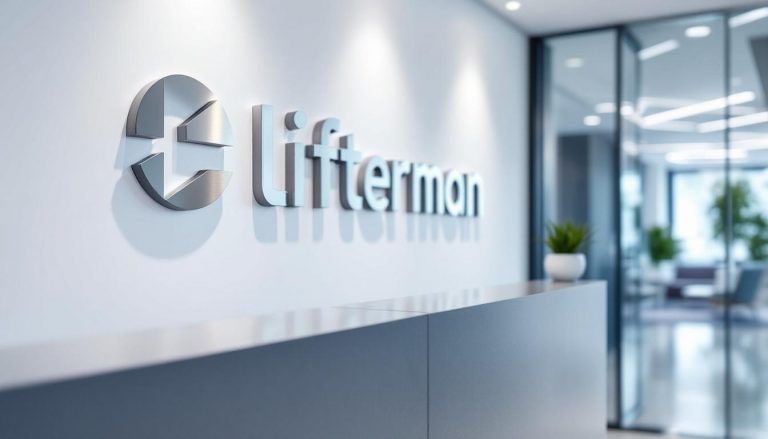
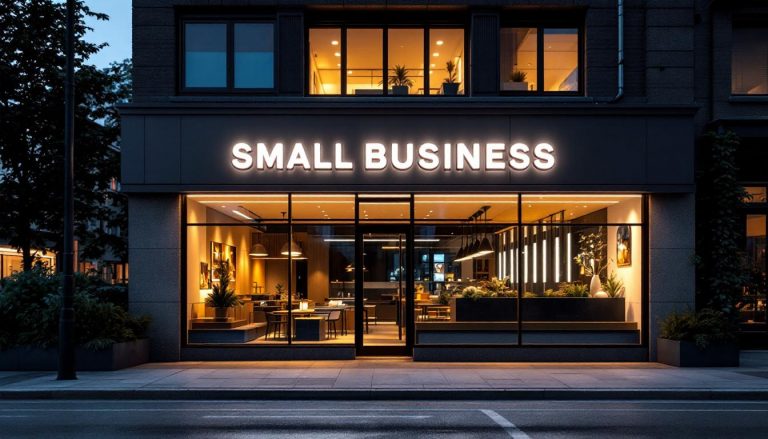
Halo-lit signs scream “luxury.” Because you aren’t looking directly at the light source, the effect is softer and easier on the eyes. It adds depth and dimension to the building facade. The letters themselves appear dark (often black or brushed silver) against a wash of light.
Best For:
- High-End Restaurants: Sets a moody, elegant tone before the guest even enters.
- Spas and Salons: Promotes relaxation rather than urgency.
- Law Firms & Financial Services: Communicates stability and permanence (metal faces look stronger than plastic).
- Hotels: upscale branding.
Pros:
- Extremely high-end look.
- Durable metal faces (aluminum doesn’t crack like acrylic can).
- Creates architectural depth.
Cons:
- Slightly more expensive: Manufacturing reverse letters involves more welding and finishing work.
- Lower Visibility: The “glow” is not as punchy as direct light. You might forfeit some long-distance freeway visibility for style.
- Example: If your business is set back 500 feet from the road, a Halo-Lit sign might be too subtle.
The “Wall Surface” Factor (Crucial Mistake to Avoid)
There is one technical trap with Halo-Lit signs that rookie sign buyers often fall into: The Wall Surface.
Since Halo-Lit signs rely on reflecting light off the wall behind them, the texture and color of that wall matter immensely.
1. Matte / Flat Walls (Best): Stucco, concrete, or matte-painted drywall are perfect. They diffuse the light evenly, creating that soft, buttery glow.
2. Glossy / Tiled Walls (Worst): If you install halo letters on a shiny polished tile or glass surface, the LED modules will reflect like a mirror. Instead of a glow, customers will see the individual dots of the LED bulbs reflected in the wall. It looks cheap and broken.
3. Dark Walls: If your wall is painted black, it will absorb the light. You won’t get a halo. If you have a dark wall, you typically need to install a “backer panel” (a lighter metal plate) behind the letters to catch the light.
Comparison Chart
| Feature | Front-Lit (Face Lit) | Halo-Lit (Reverse Lit) |
| :— | :— | :— |
| Material | Acrylic Face / Alum Sides | Aluminum Face / Poly Back |
| Brightness | High (10/10) | Medium (6/10) |
| Vibe | “Open for Business”, Retail | “Exclusive”, “Luxury”, Professional |
| Cost | $$ | $$$ |
| Best Wall | Any | Matte/Light Colored |
| Readability | Excellent at long distance | Better at medium/close distance |
Can You Have Both? (Front & Back Lit)
Yes. It is called Dual-Lit or Combination-Lit.
We can build a letter with an acrylic face (for front glow) *and* a clear back (for halo glow). You can even use different colors—for example, a Blue Front glow and a White Halo glow. This is the most expensive option as it requires double the LEDs and complex fabrication, but the visual impact is stunning.
Which is Right for You?
Ask yourself these three questions:
1. What is my distance? If you are right on the sidewalk (Old Town Glendora), Halo is perfect. If you are a freeway pylon sign, Front-Lit is mandatory.
2. What is my vibe? Are you selling $5 burgers (Front-Lit) or $50 steaks (Halo-Lit)?
3. What is my wall? Is it compatible with halo lighting?
At R&R Signs, we don’t just guess. We can take a photo of your building and provide a digital rendering showing you exactly what Front-Lit vs. Halo-Lit would look like on your specific facade at night.
Don’t spend thousands on a sign only to realize it’s too bright or too dim. Contact us today to schedule a site survey and discuss your building sign options.