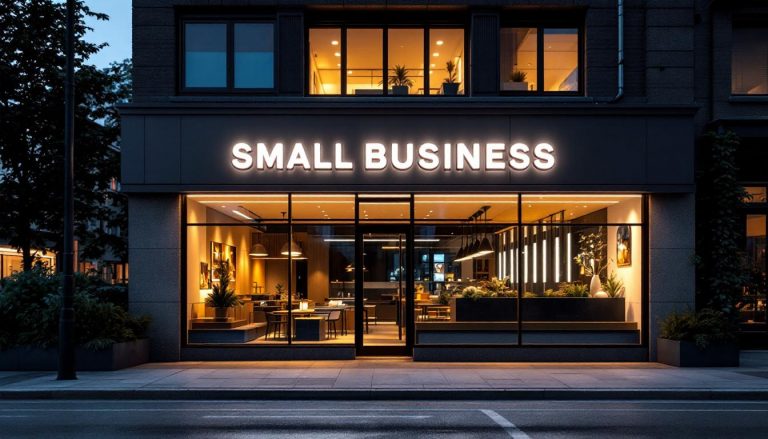
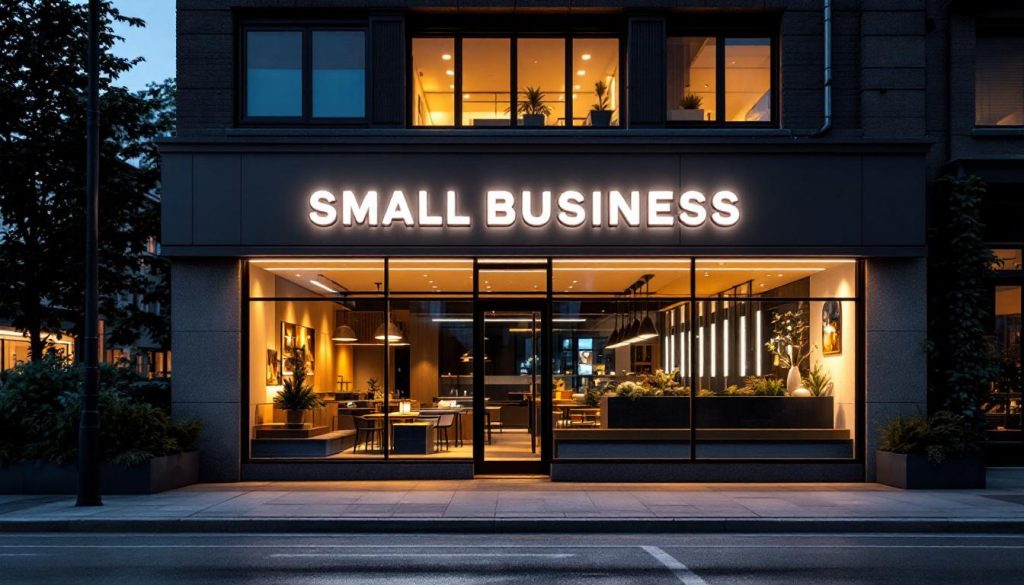
Your storefront sign is the first impression your business makes — and for many customers, it is the deciding factor between walking through your door or continuing down the street. In an era of digital marketing and social media branding, the physical sign on your building remains one of the most cost-effective marketing investments a small business can make. It works 24 hours a day, 365 days a year, with no recurring ad spend.
But not all storefront signs are created equal. The sign types that dominated commercial streetscapes ten years ago look dated by today’s standards, and the technology available in 2026 makes it possible to achieve professional, high-impact signage at price points that work for small business budgets.
This guide covers the five best types of storefront signs for small businesses in 2026, with practical guidance on where each type works best, what they cost, and how to choose the right option for your brand and location.
1. Front-Lit Channel Letters: The Proven Standard
Channel letters remain the most popular storefront sign type in the United States for good reason: they deliver the best combination of daytime visibility, nighttime illumination, brand customization, and long-term durability.
What They Are
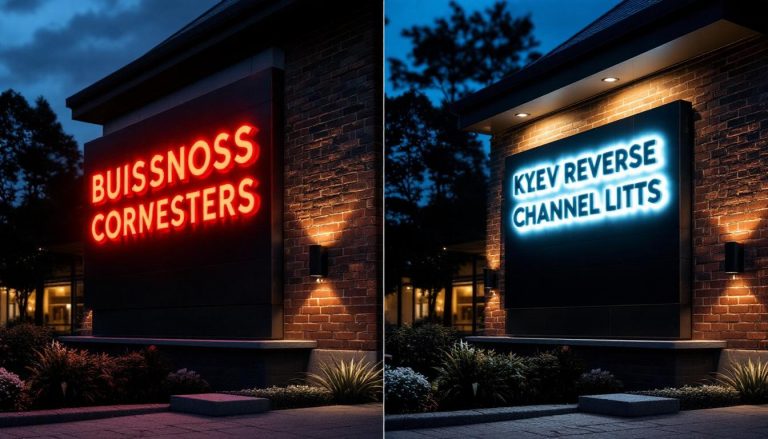
Channel letter signs are individually fabricated three-dimensional letters made from aluminum returns (the sides), an aluminum back, and a translucent acrylic face. Each letter contains LED modules that illuminate the acrylic face from within, producing a bright, evenly lit sign that is visible day and night.
The letters are mounted on an aluminum raceway (a rectangular channel that houses the electrical wiring) or directly to the building face through individual stud mounting. The raceway method is faster to install and easier to service; the direct-mount method creates a cleaner look because the raceway is hidden.
Why They Work
Front-lit channel letters offer several advantages that make them the default choice for retail, restaurant, and service businesses:
- Custom Typography: Each letter set is fabricated to match your exact brand fonts, colors, and proportions. This is not a vinyl sticker on a lightbox — it is a three-dimensional reproduction of your brand identity.
- Visibility: The illuminated faces are readable from hundreds of feet away during daytime (through shape and color contrast) and at night (through LED illumination).
- Durability: Aluminum construction resists corrosion, UV degradation, and impact. LED modules have rated lifespans of 50,000 to 100,000 hours — roughly 7 to 14 years of continuous operation.
- Code Compliance: Channel letters are accepted by virtually every municipality in Southern California. They are the standard sign type referenced in most commercial sign ordinances.
Best For
Retail stores, restaurants, salons, fitness studios, medical offices, and any business with a dedicated storefront on a commercial corridor. If you want one sign type that performs reliably in almost any context, front-lit channel letters are the answer.
2026 Considerations
LED technology continues to improve in efficiency and color rendering. Current-generation LED modules produce more uniform illumination with lower power consumption than modules from even three years ago. If you are replacing an older channel letter sign, the upgrade in light quality will be immediately noticeable.
RGB (color-changing) LED modules are also available for businesses that want the ability to change their sign color for holidays, promotions, or branding updates. However, check local sign codes before specifying RGB — some cities restrict color-changing illumination.
2. Reverse-Lit (Halo) Channel Letters: The Premium Choice
If front-lit channel letters are the standard, reverse-lit channel letters are the upgrade. Also called “halo-lit” or “backlit” letters, this sign type has become the go-to choice for businesses that want a sophisticated, modern appearance.
What They Are
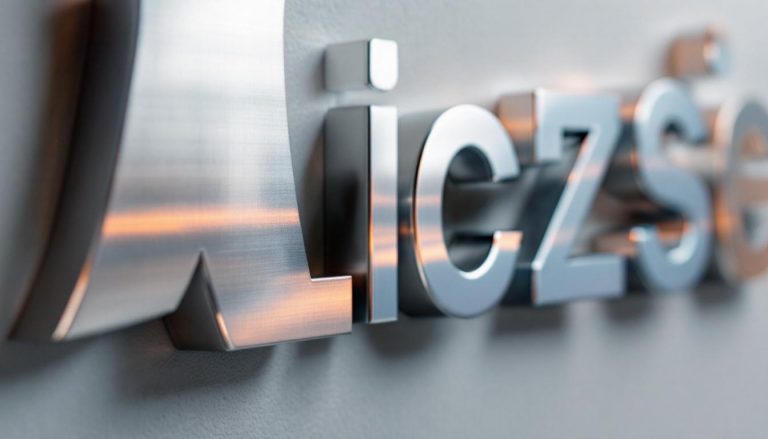
Reverse-lit channel letters are constructed similarly to front-lit letters — aluminum returns and backs — but with one critical difference: the face of each letter is opaque (typically painted aluminum or brushed metal), and the LED modules face backward, illuminating the wall behind the letter rather than the letter face itself.
The result is a soft “halo” of light that outlines each letter against the building wall. During the day, the letters appear as solid, high-quality metal forms. At night, the halo effect creates a dramatic, understated glow that draws attention without the bright, in-your-face illumination of a front-lit sign.
Why They Work
Reverse-lit letters communicate quality and refinement. The halo effect is associated with premium brands because it requires precision manufacturing — the gap between the letter and the wall must be consistent for the halo to look uniform, and the LED placement must be carefully engineered to avoid hot spots or uneven wash.
This sign type works particularly well on:
- Dark-colored building facades (where the light contrast is most dramatic).
- Stone, brick, or textured wall surfaces (where the halo light creates visual depth).
- Buildings with clean, modern architectural lines.
Best For
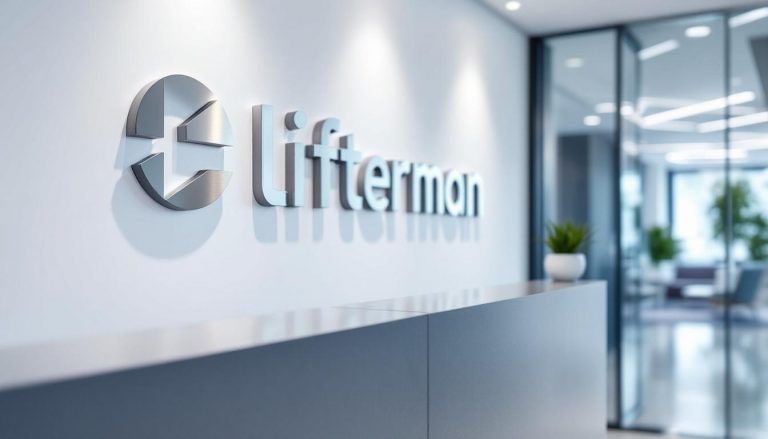
Spas, upscale restaurants, law firms, accounting firms, dental practices, architectural firms, boutique retail, and any business where the brand identity emphasizes professionalism, quality, and sophistication. If your business has a reception sign in the lobby with a similar aesthetic, matching the exterior with reverse-lit letters creates a cohesive brand experience from sidewalk to front desk.
2026 Considerations
The cost premium for reverse-lit letters over front-lit has decreased as LED technology has standardized. In 2026, the price difference is typically 15 to 25 percent — a worthwhile investment for businesses where brand perception directly affects revenue.
Combination channel letters — front-lit faces with reverse-lit halos — are also growing in popularity. These “front and back lit” letters provide maximum visibility (bright face) plus the premium halo effect, giving you the best of both worlds.
3. Blade Signs: Capturing Pedestrian Traffic
Blade signs — also called projecting signs or flag signs — extend perpendicular from the building face, making them visible to pedestrians and drivers moving parallel to the storefront. While wall-mounted signs face the street, blade signs face the sidewalk, capturing an entirely different sightline.
What They Are
A blade sign is a flat or dimensional sign panel mounted on a bracket that projects outward from the building wall, typically 2 to 4 feet. They can be non-illuminated (painted aluminum, carved wood, or composite panels) or internally illuminated with LED modules behind a translucent face.
Blade signs range from small (2 feet by 2 feet for a single business) to large (3 feet by 6 feet for multi-story buildings). The mounting bracket is usually decorative wrought iron, brushed stainless steel, or powder-coated aluminum, and contributes to the overall aesthetic of the sign.
Why They Work
In pedestrian-oriented commercial districts — downtown areas, village shopping streets, mixed-use developments — the primary challenge is visibility along the sidewalk. A customer walking east on a commercial street cannot easily read wall signs on buildings to their left and right because those signs face the street, not the sidewalk.
Blade signs solve this problem by presenting the business name and logo perpendicular to the building face, directly in the pedestrian’s line of sight. They function as wayfinding elements that help customers find businesses within a row of storefronts.
Best For
Restaurants, cafes, retail boutiques, professional offices, and service businesses in walkable commercial districts. Blade signs are particularly effective in mixed-use buildings where ground-floor commercial tenants need to differentiate themselves from the residential or office floors above.
In communities like Glendora’s Village area, blade signs are not only effective — they are sometimes the preferred or required sign type under the specific plan design standards. The historic, pedestrian-friendly character of the district aligns perfectly with the blade sign format.
2026 Considerations
Faux-neon blade signs — using flexible LED tubing bent into custom shapes and letters — have emerged as a popular trend. These signs evoke the warmth and character of traditional neon without the fragility, high voltage, or mercury content. Faux-neon blade signs work particularly well for restaurants, bars, and specialty retail where a retro or artisanal aesthetic is part of the brand identity.
4. Window Graphics: The Budget-Friendly Supplement
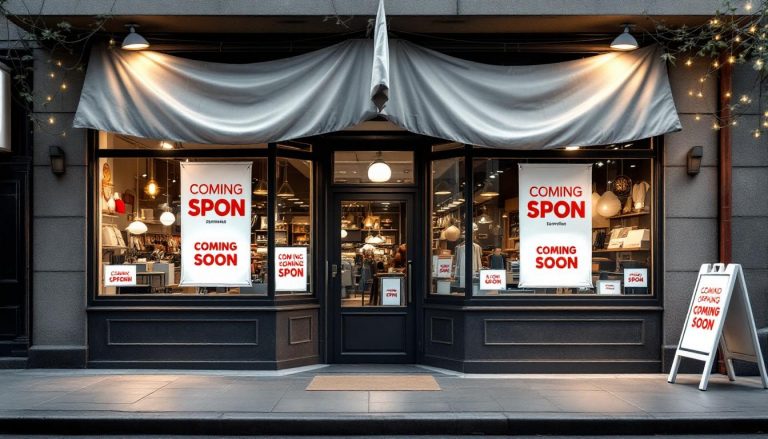
Window graphics are not a replacement for a primary storefront sign, but they are a highly effective supplement that every small business should consider. Applied directly to your existing storefront glass, window graphics add brand messaging, service information, and visual interest at a fraction of the cost of fabricated signage.
What They Are
Window graphics include several formats:
- Vinyl Cut Letters and Logos: Individual letters or logo shapes cut from adhesive vinyl and applied to the glass surface. These can be opaque (solid colors) or frosted (etched glass appearance).
- Full-Panel Window Wraps: Printed vinyl graphics that cover a portion or all of a window, typically featuring product images, service lists, or branded patterns.
- Perforated Window Film: Printed vinyl with tiny perforations that allow one-way visibility — the graphic is visible from outside, but people inside can see through the window. This is the same technology used on vehicle wraps.
- Frosted Privacy Film: Non-printed vinyl that creates an etched or frosted glass effect, often used for privacy in medical offices, spas, and professional services while still incorporating cut-out logo areas that remain clear.
Why They Work
Window graphics are versatile, affordable, and fast to produce and install. A full set of window graphics for a standard storefront can be designed, printed, and installed within a week — far faster than fabricated signage. They are also easily changeable, making them ideal for seasonal promotions, menu updates, or branding refreshes.
For businesses operating on tight budgets, window graphics provide immediate brand presence while the primary sign (channel letters or a blade sign) is being fabricated and permitted. This is particularly valuable for new businesses that need to open before their permanent sign is installed.
Best For
Every storefront business can benefit from window graphics as a complement to their primary signage. They are especially valuable for restaurants (displaying menus and hours), professional offices (providing a polished, branded appearance), retail stores (showcasing product categories), and any business that wants to maximize the visual impact of its existing glass frontage.
2026 Considerations
Print quality for window graphics has reached photographic levels, and UV-resistant inks extend the lifespan of outdoor-facing graphics to 3 to 5 years before color fading becomes noticeable. Frosted vinyl with integrated brand elements has become particularly popular for professional service businesses seeking a clean, modern aesthetic without the visual clutter of printed imagery.
Most jurisdictions, including cities in the San Gabriel Valley, exempt window graphics from permitting requirements as long as they cover less than 25 percent of the total glass area. Check your local sign code to confirm the threshold for your address.
5. Push-Through Acrylic Cabinet Signs: The Modern Box Sign
Cabinet signs — sometimes called lightbox signs — have been a staple of commercial signage for decades. The traditional version features a rectangular aluminum cabinet with flat, flush acrylic faces and internal fluorescent lighting. While functional, this format looks dated by 2026 standards.
The modern evolution is the push-through acrylic cabinet sign, which upgrades the format with dimensional elements, LED illumination, and contemporary design techniques that give the old box sign a professional refresh.
What They Are
A push-through cabinet sign starts with the same basic structure — an aluminum cabinet mounted to the building face — but replaces the flat printed face with dimensional acrylic letters and shapes that are “pushed through” routed openings in the cabinet face. The acrylic elements protrude from the face of the cabinet, creating a three-dimensional effect. When illuminated from behind by LED modules inside the cabinet, the pushed-through elements glow while the cabinet face remains opaque or semi-opaque.
The result is a sign that has the clean, contained look of a cabinet sign but with the dimensional impact and modern appearance of individual channel letters.
Why They Work
Push-through cabinet signs offer a practical middle ground between flat cabinet signs (which look cheap) and individual channel letters (which cost more). They are particularly effective for businesses with logos or brand elements that do not translate well to individual letter fabrication — complex logos, icons, taglines, and graphic elements can all be routed and push-through mounted within the cabinet format.
The cabinet structure also provides a clean backdrop for the dimensional elements, hiding all wiring and LED components. Maintenance is straightforward — the cabinet face is typically hinged or removable for internal access to the LED system.
Best For
Franchise businesses with specific brand standards that include cabinet-format signage, multi-service businesses that need to display more information than a simple letter set allows, and businesses with complex logos or graphic marks that require flat-panel reproduction. Push-through cabinets are also a practical choice for buildings where individual letter mounting is difficult due to wall material or structural limitations.
For businesses looking at a complete storefront refresh, combining a push-through cabinet for the primary identification sign with individual custom building signs for secondary messaging creates a layered, professional appearance.
2026 Considerations
LED technology has completely replaced fluorescent lighting in cabinet signs. Modern LED modules are lighter, more energy-efficient, longer-lasting, and produce more uniform illumination than the fluorescent tubes that powered older cabinet signs. If you have an existing cabinet sign with fluorescent internals, a retrofit to LED is one of the highest-value upgrades available — it improves light quality, reduces energy costs, and extends the service interval between maintenance visits.
Slim-profile cabinets (3 to 4 inches deep instead of the traditional 6 to 8 inches) have also become standard, giving the sign a more streamlined appearance that is easier to approve in communities with strict aesthetic standards.
Choosing the Right Sign for Your Business
The best storefront sign for your business depends on several interrelated factors:
Brand positioning. Premium brands gravitate toward reverse-lit letters and blade signs. Value-oriented brands often find that front-lit channel letters provide the best balance of visibility and cost.
Building architecture. The sign should complement the building, not fight against it. A historic brick facade calls for different sign treatments than a modern glass-and-steel storefront.
Local sign codes. Every city in the San Gabriel Valley — Glendora, Covina, San Dimas, Azusa, La Verne — has its own sign ordinance that dictates what types, sizes, and illumination methods are allowed. Your sign company should verify code compliance before you approve a design.
Budget. Window graphics and simple blade signs can be installed for a few hundred to a few thousand dollars. Illuminated channel letters and monument signs range from $5,000 to $30,000+. Understanding the cost spectrum helps you prioritize your signage investment.
Tenant vs. owner. If you are a tenant, your lease agreement may specify which sign types are allowed, and the landlord’s approval is required before permitting. Property owners have more flexibility but also bear responsibility for maintaining overall property aesthetics.
Start With a Design Consultation
The most efficient way to determine which sign type is right for your storefront is to consult with a manufacturer that can evaluate your building, review the local code, and present design options with realistic pricing.
A sign manufacturer that handles design, permitting, fabrication, and installation in-house can walk you through each option with mockups placed on actual photos of your building — so you can see exactly how each sign type will look before committing.
Request a free quote and get a custom recommendation for your storefront based on your brand, your building, and your budget.