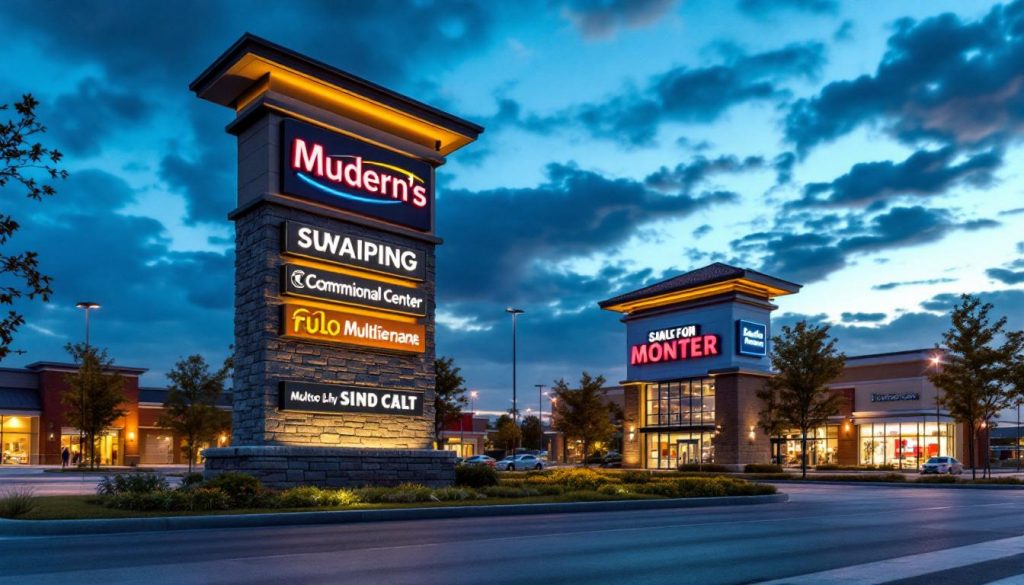
When it comes to ground-mounted commercial signage, two options dominate the conversation: monument signs and pylon signs. Both serve the fundamental purpose of identifying your business from the street, but they do it in very different ways — and the right choice depends on your location, traffic speed, zoning regulations, tenant configuration, and brand positioning.
This comparison breaks down the practical differences between monument signs and pylon signs so you can make an informed decision based on the factors that actually affect visibility, compliance, and long-term value.
What Is a Monument Sign?
A monument sign is a freestanding, ground-level sign structure that sits close to the ground, typically with its base flush with or just above grade level. Monument signs are built on concrete foundations and feature solid construction using materials like aluminum, stone veneer, stucco, brick, or architectural composites.
The defining characteristic of a monument sign is its low profile. Most monument signs range from 4 to 8 feet in total height, though specific dimensions are governed by local zoning codes. The sign face is integrated into the structure rather than mounted on a tall pole, creating a substantial, permanent appearance that communicates stability and quality.
Where Monument Signs Work Best
Monument signs are the preferred choice for properties located on streets with speed limits of 35 mph or lower. At these speeds, drivers have enough time to read a sign that sits at or near eye level. Common applications include:
- Shopping centers and retail plazas with direct street frontage.
- Office parks and professional buildings where a polished, corporate image matters.
- Medical facilities, dental offices, and law firms that want to convey professionalism.
- Churches, schools, and institutional campuses where community-appropriate aesthetics are important.
- Multi-tenant commercial properties where each tenant needs identification within a cohesive structure.
A well-designed monument sign enhances curb appeal and becomes a permanent architectural element of the property. When it is built with quality materials and integrated with the building’s landscaping, it adds measurable value to the property itself.
Monument Sign Construction
Monument sign construction involves several phases:
- Foundation: A reinforced concrete footing is poured below grade, sized according to the structural engineer’s calculations based on soil conditions, wind exposure, and sign dimensions.
- Internal Framework: A steel or aluminum internal skeleton provides structural support for the sign faces and decorative cladding.
- Cladding and Finish: The exterior is finished with materials that match or complement the building architecture — stone, brick, stucco, painted aluminum panels, or composite materials.
- Sign Faces: Tenant identification panels, illuminated push-through acrylic letters, or routed aluminum faces with LED backlighting are mounted into the structure.
- Illumination: Internal LED modules, externally mounted gooseneck lights, or halo-lit letters provide nighttime visibility.
The result is a permanent structure that looks like it belongs on the property — not a temporary fixture bolted to a pole.
What Is a Pylon Sign?
A pylon sign — sometimes called a pole sign or freestanding elevated sign — is mounted on one or two vertical poles that lift the sign face well above ground level. Pylon signs commonly range from 15 to 40 feet in total height, though some highway-adjacent installations can exceed 50 feet where local codes allow.
The defining characteristic of a pylon sign is altitude. The sign face is elevated to maximize visibility for drivers approaching at higher speeds or from greater distances.
Where Pylon Signs Work Best
Pylon signs are designed for high-visibility situations where ground-level signage would be blocked by landscaping, parked vehicles, other structures, or the sheer distance between the sign and the approaching driver. Common applications include:
- Highway-adjacent businesses — gas stations, restaurants, and hotels near freeway off-ramps.
- Large shopping centers and malls with significant setback from the road.
- Auto dealerships where signs need to be visible from a quarter-mile away.
- Multi-tenant retail strips where a tall sign listing all tenants catches the attention of fast-moving traffic.
- Properties on high-speed arterial roads with speed limits of 45 mph or higher.
The classic pylon sign format features a cabinet or panel structure mounted on exposed steel poles, with individual tenant panels stacked vertically. More modern pylon designs enclose the support structure within a decorative column or shroud, creating a cleaner appearance that blends pylon-level height with monument-style aesthetics.
Pylon Sign Construction
Pylon sign construction requires:
- Deep Foundation: Because of the height and wind exposure, pylon signs require substantial concrete caisson foundations — often 4 to 6 feet deep, depending on soil conditions and sign height.
- Steel Poles or Columns: Heavy-gauge steel columns support the sign structure. These are engineered for wind load in the specific geographic zone of the installation.
- Sign Cabinet or Panel Assembly: The sign face is typically an aluminum cabinet with translucent acrylic or polycarbonate faces for illuminated signs, or individual channel letters mounted on a raceway for a more custom appearance.
- Crane Installation: Due to the height, pylon sign installation requires a crane to lift the cabinet or panel assembly onto the pole structure. This adds to installation cost and requires traffic control planning.
- Electrical Service: A dedicated electrical circuit runs underground from the building or a utility panel to the base of the pylon, then up through the pole structure to the sign cabinet.
The Direct Comparison: Monument vs. Pylon
Visibility and Traffic Speed
This is the primary decision factor. Monument signs perform well in moderate-traffic environments (25-40 mph) where drivers are already navigating a parking lot entrance, intersection, or commercial district. They are designed to be read at closer range and slower speeds.
Pylon signs are engineered for high-speed, long-distance visibility. If your customers are driving 50 mph on a six-lane arterial and need to spot your business from 500 feet away, a monument sign at ground level will be insufficient. A pylon sign solves this problem by getting the sign face above the visual clutter of parked cars, landscaping, and competing signage.
Aesthetics and Brand Perception
Monument signs project permanence, quality, and architectural sophistication. They are the preferred choice for businesses that want to convey a premium or professional image. Banks, medical offices, corporate campuses, and upscale retail centers almost universally choose monument signs because the visual message aligns with their brand positioning.
Pylon signs prioritize function over form. While modern pylon designs have improved significantly — with enclosed columns, decorative caps, and LED channel letters replacing the old plastic-face cabinets — a pylon sign still communicates “commercial” more than “architectural.” For businesses where visibility at speed is the primary goal, this tradeoff is worthwhile.
Multi-Tenant Configurations
Both sign types accommodate multi-tenant configurations, but they do it differently.
Monument signs with multi-tenant panels typically display 3 to 6 tenant names within a compact structure. The limited height means each tenant gets less vertical space, which can constrain letter size and readability from a distance.
Pylon signs can accommodate more tenants because they have more vertical real estate. A 25-foot pylon sign might display 8 to 12 tenant names in a stacked configuration, each with enough letter height to be readable from the street.
For shopping center owners and property managers, this tenant capacity difference can influence the decision, especially when lease agreements promise specific signage provisions to anchor and inline tenants.
Cost Comparison
Monument signs and pylon signs occupy different cost ranges, and the comparison depends heavily on size, materials, and illumination.
Small to mid-size monument signs (4 to 6 feet tall, single-tenant, illuminated) typically range from $8,000 to $25,000 installed, depending on materials and complexity. Large multi-tenant monument signs with stone or brick cladding, LED illumination, and custom architectural details can range from $25,000 to $60,000 or more.
Pylon signs generally start at $15,000 for a basic single-pole, single-cabinet design and can reach $50,000 to $100,000+ for tall, multi-tenant, internally illuminated structures requiring deep foundations and crane installation.
The ongoing maintenance costs also differ. Monument signs are accessible by ladder or small lift for routine maintenance — LED replacements, face cleaning, and repainting. Pylon signs require a bucket truck or crane for any service above the pole base, which increases the cost of every maintenance visit.
The Zoning Factor: Why Your City May Choose for You
In many San Gabriel Valley communities, the decision between monument and pylon is not entirely yours to make. Zoning regulations increasingly favor monument signs and restrict or prohibit new pylon installations.
Glendora, for example, has been trending toward low-profile signage for years. The city’s sign ordinance and specific plan areas along Foothill Boulevard generally prefer monument-style ground signs that are architecturally compatible with the surrounding buildings and streetscape. New tall pylon signs are difficult — and in some zones, impossible — to get approved.
This regulatory trend reflects a broader shift across Southern California. Cities want their commercial corridors to look clean and cohesive, not cluttered with tall pole signs competing for attention. Many properties that currently have legacy pylon signs will be required to replace them with monument signs when the existing sign is removed or substantially modified.
Before you commit to a sign type, check with your local planning department — or work with a sign company that already knows the code for your specific address. Designing a 30-foot pylon sign for a location where the zoning only allows a 6-foot monument sign is a waste of everyone’s time and money.
Hybrid Designs: The Modern Compromise
Recognizing that some locations need more height than a traditional monument but more aesthetics than a traditional pylon, the sign industry has developed hybrid designs that borrow from both categories.
A hybrid design might feature a monument-style base with enclosed columns that extend the sign face to 10 or 12 feet — taller than a standard monument but far lower and more architecturally refined than a pylon. These designs are often more approvable in cities with strict sign codes because they maintain the visual discipline of a monument sign while providing additional height for visibility.
Another hybrid approach uses a single architecturally clad column (rather than exposed steel poles) to support an elevated sign panel. The result looks like a tall, slim monument rather than a pylon on poles. These designs are gaining popularity for multi-tenant retail properties that need tenant visibility from arterial roads but cannot get traditional pylon approval.
A qualified sign manufacturer can design hybrid options that maximize your visibility within your specific zoning constraints.
Making the Right Decision for Your Property
The monument vs. pylon decision comes down to four factors:
1. Traffic Speed and Viewing Distance. If your primary traffic moves at 40 mph or faster and your building is set back from the road, a pylon or hybrid design may be necessary. If traffic is slower and your frontage is close to the street, a monument sign is typically the better choice.
2. Zoning Regulations. Check your local sign code before you fall in love with a design. Many cities in the San Gabriel Valley — including Glendora, Covina, San Dimas, and La Verne — have height restrictions that effectively mandate monument-style signage.
3. Brand Positioning. If your brand emphasizes quality, professionalism, and permanence, a monument sign reinforces that message. If your priority is maximum visibility for impulse-driven traffic (fast food, gas stations, convenience retail), a pylon sign delivers more eyeballs.
4. Budget and Maintenance. Monument signs generally cost less for single-tenant applications and are cheaper to maintain over their lifespan. Pylon signs cost more upfront and require specialized equipment for every service call.
For multi-tenant properties, the decision often comes down to tenant count and the landlord’s signage commitments in the lease agreements. A property manager with 12 tenants who all expect street-facing identification may need the vertical real estate that only a pylon or tall hybrid design can provide.
Get Expert Advice for Your Specific Location
Every property has unique characteristics — street frontage, setback distance, traffic speed, zoning district, and architectural context — that influence which sign type will deliver the best return on investment. Generic advice only goes so far.
The most productive next step is to consult with a sign company that can evaluate your specific site, review the applicable zoning regulations, and present design options that are both code-compliant and effective for your visibility goals.
Whether you need a custom building sign for a single-tenant property or a multi-tenant ground sign for a commercial plaza, the right design starts with a site-specific analysis.
Schedule a consultation to get a recommendation tailored to your property and zoning district.