Your business sign is the most visible element of your brand. It works around the clock — attracting foot traffic, guiding customers to your door, and communicating credibility before anyone walks inside. Choosing the wrong sign company means risking a subpar product, permit delays, and ongoing maintenance headaches. Choosing the right one means getting a sign that performs for years with minimal intervention.
If you operate a business in Glendora or the surrounding San Gabriel Valley, this guide will help you evaluate sign companies based on the criteria that actually matter: licensing, fabrication capability, permit expertise, and full-service delivery.
Why Your Sign Company Choice Matters More Than You Think
Business owners often approach sign purchases the same way they buy office furniture — get a few quotes, pick the cheapest one, and move on. But commercial signage is a licensed construction trade in California, not a commodity purchase. The company you hire will be responsible for structural engineering, electrical work, code compliance, municipal permitting, and physical installation on your building or property.
A bad sign installation can result in code violations, electrical hazards, structural failures during high winds, and forced removal by city inspectors. These are not hypothetical risks. They happen regularly when business owners hire unlicensed installers or work with companies that lack the technical capability to deliver a compliant product.
The difference between a good sign company and a mediocre one shows up in every phase of the project — from the accuracy of the initial quote to the quality of the final inspection.
Check the License: Why C-45 Certification Is Non-Negotiable
In California, any sign installation valued at more than $500 (including labor and materials) must be performed by a contractor holding a C-45 Sign license issued by the Contractors State License Board (CSLB). This is not a suggestion or a best practice — it is state law.
The C-45 license confirms that the contractor has demonstrated competency in sign fabrication, electrical systems, structural mounting, and safety standards. It also means the contractor carries the required bond and insurance minimums mandated by the state.
What Happens When You Hire an Unlicensed Installer
General handymen, general contractors without a C-45, and unlicensed “sign guys” cannot legally install commercial signage in California. If you hire one, several things can go wrong:
- The city may refuse to issue a permit because the installer is not qualified.
- If the sign is installed without a permit, code enforcement can require removal at your expense.
- If someone is injured during installation or by a sign that fails, your liability exposure increases dramatically because the work was performed by an unlicensed contractor.
- You lose access to CSLB dispute resolution if the work is defective.
Before signing any contract, verify the company’s C-45 license on the CSLB website. It takes two minutes and can save you thousands in rework and liability.
The Broker vs. Manufacturer Question
This is the single most important distinction in the sign industry, and most business owners do not know it exists.
What Is a Sign Broker?
A sign broker is a company that sells signage but does not fabricate it. They take your order, send it to a wholesale manufacturer (often out of state), receive the finished product, and arrange for installation — sometimes using subcontracted crews they have never worked with before.
Brokers add a markup at every stage. You pay more for the sign itself because the broker’s margin is built on top of the manufacturer’s wholesale price. You pay more for installation because the broker is coordinating with a third-party crew rather than using their own trained installers. And when something goes wrong — a color mismatch, a dimensional error, a panel that arrives damaged — the broker has to go back to the wholesale manufacturer to resolve it, adding days or weeks to your timeline.
What Is a Sign Manufacturer?
A sign manufacturer designs, engineers, fabricates, and installs signage using their own facility and their own team. When you walk into a manufacturer’s shop, you can see your sign being built. You can talk directly to the fabricator about materials, finishes, and construction methods. And when the sign is ready, their own licensed installers mount it on your building.
This in-house model eliminates the broker markup, reduces communication errors, and shortens timelines significantly. If a plan check correction comes back from the city, the manufacturer’s design team can revise the drawings the same day rather than routing the request through a middleman.
The Question to Ask
When evaluating any sign company, ask this direct question: “Do you build this sign in your own facility?”
If the answer is no, you are working with a broker. That does not automatically disqualify them, but it means you should expect higher costs, longer lead times, and less control over quality.
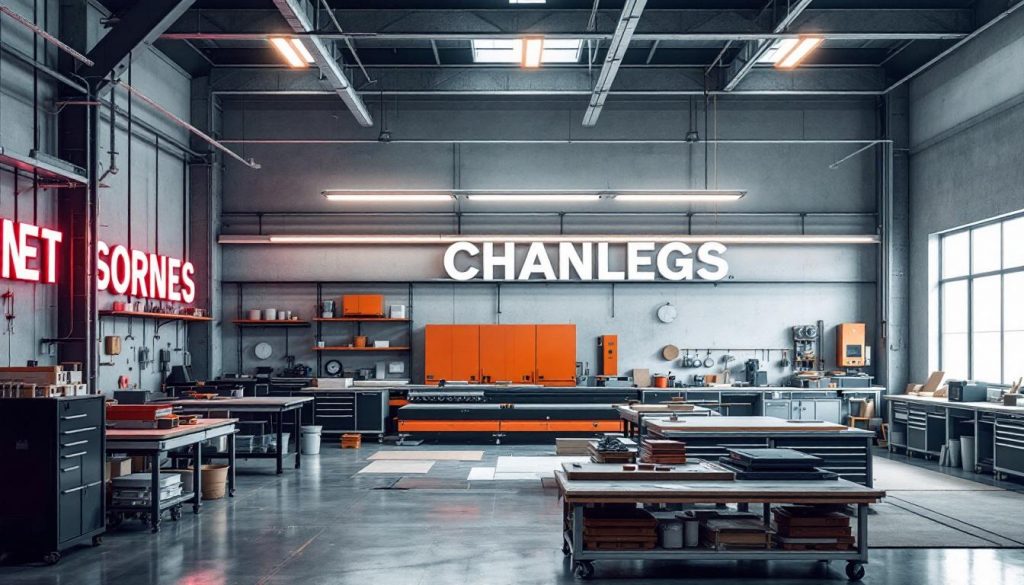
If you want to see the difference firsthand, visit a Glendora sign company with an in-house fabrication shop. Walk the production floor. See the CNC router cutting aluminum, the paint booth finishing channel letter returns, and the LED modules being wired by hand. That transparency is something a broker cannot offer.
Permit Expertise: Do They Know Your City’s Codes?
A sign is only as good as its ability to get approved by the local planning department. In the San Gabriel Valley, every city has its own sign ordinance, and some have specific plan areas with additional design restrictions.
Glendora, for example, has strict aesthetic standards along the Foothill Boulevard corridor and in the Village area. Signs in these zones must meet specific design guidelines related to height, materials, illumination style, and architectural compatibility. A sign company that does not know these rules will design a sign that gets rejected at plan check, costing you time and revision fees.
When evaluating a sign company, ask these questions:
- Have you completed permitted sign installations in my city within the last year?
- Do you prepare the permit application package in-house, or do I need to handle that separately?
- Can you show me examples of approved sign permits in my specific zone or corridor?
A company that regularly works in Glendora, Covina, San Dimas, Azusa, and La Verne will have established relationships with local planners and a track record of successful approvals. That experience translates directly into faster timelines and fewer surprises.
Full-Service Capability: Design Through Maintenance
The best sign companies handle every phase of the project under one roof. Here is what a full-service engagement should include:
Design and Concept Development
The process should start with a site visit and a design consultation. The sign company should evaluate your building frontage, visibility angles, existing signage, and any architectural constraints. From there, they should produce digital mockups showing how the sign will look on your specific building — not generic templates, but photorealistic renderings placed on actual photos of your location.
Engineering and Permitting
The sign company should prepare all permit-ready documents, including site plans, elevation drawings, structural calculations (stamped by a licensed engineer), and electrical specifications. They should submit the application to the city on your behalf and manage all plan check corrections until the permit is issued.
Fabrication
In-house fabrication means your sign is built in a controlled environment by skilled tradespeople who work with sign materials every day. This includes CNC cutting, welding, painting, LED wiring, and quality testing. A manufacturer can also make last-minute adjustments during fabrication — something that is nearly impossible when the sign is being built at a remote wholesale facility.
Installation
Installation should be performed by the sign company’s own licensed C-45 crew using properly rated equipment. For wall-mounted channel letter signs, this typically involves boom lifts, electrical conduit routing, and secure structural anchoring. For monument signs, it involves foundation excavation, concrete work, and multi-day construction sequences.
Ongoing Maintenance and Service
Signs require periodic maintenance — LED module replacements, face cleaning, electrical troubleshooting, and storm damage repairs. A good sign company offers maintenance agreements and can dispatch a service crew quickly because they built the sign and know its construction intimately.
If any of these phases are outsourced to a different company, coordination problems are inevitable. The advantage of a single-source provider is accountability. One company, one point of contact, one team responsible for the entire lifecycle of your sign.
Red Flags to Watch For
Over years of working alongside business owners in the San Gabriel Valley, certain warning signs have proven reliable indicators of a problematic sign company:
No physical shop or fabrication facility. If the company operates out of a home office or a small retail storefront with no production equipment, they are a broker. There is nothing wrong with meeting in an office, but the fabrication should happen in a real shop that you can visit.
Quotes that seem too low. If one quote is 40 percent below the others, something is being cut. It might be thinner aluminum, lower-grade LEDs, no structural engineering, or unlicensed installation labor. In signage, you generally get what you pay for.
No mention of permits in the proposal. If the quote does not include a line item for permit preparation and submission, the company is either planning to skip the permit (illegal) or expecting you to handle it yourself (unusual for a professional sign company).
No portfolio of local work. A company that cannot show you completed projects in your city or neighboring cities may lack the local experience to navigate your specific permitting environment.
Pressure to sign immediately. Professional sign companies understand that this is a considered purchase involving landlord approval, city permitting, and budgeting. High-pressure sales tactics are a red flag.
What to Expect From the Process
A well-run sign project with a qualified manufacturer typically follows this timeline:
- Week 1-2: Site visit, design consultation, and concept presentation.
- Week 2-3: Design approval, engineering, and permit package preparation.
- Week 3-6: Permit submission and plan check (varies by city).
- Week 6-8: Fabrication (runs concurrently with plan check when possible).
- Week 8-9: Installation and final inspection.
Total timeline from first meeting to illuminated sign: approximately 8 to 12 weeks for a standard custom building sign project. More complex projects — multi-tenant monument signs, large-scale rebranding packages — may take longer.
Understanding this timeline helps you plan your grand opening, lease commencement, or rebranding rollout with realistic expectations.
Make the Right Choice for Your Business
Selecting a sign company is a decision that affects your brand visibility, code compliance, and long-term maintenance costs for years to come. Prioritize licensed C-45 contractors with in-house fabrication, local permit expertise, and a track record of completed projects in your community.
If your business is in Glendora or anywhere in the San Gabriel Valley, the best way to evaluate a sign company is to visit their facility, review their local portfolio, and ask the hard questions about licensing, fabrication, and permitting before you commit.
Get a no-obligation estimate and see the production floor where your sign will be built.